AI in Energy Management: Smarter Grids, Smarter Choices


AI in energy management is moving from pilots to platform capability, and AI in energy management now turns raw meter and device data into forecasts, automation, and market actions that cut cost and carbon.
Artificial intelligence is redefining how electricity is produced, traded, and consumed. With smart meters, DERs, and market signals streaming every minute, machine‑learning models convert noise into actionable control—scheduling flexible loads, bidding storage, and coordinating community energy. The IEA and NREL detail how digitalization and AI improve reliability while integrating high shares of renewables.
Energy trading is getting sharper. Short‑term models now fuse weather, wholesale markets, and device telemetry to predict supply and demand with high accuracy, improving buying and selling decisions and reducing imbalance costs. In the Netherlands, Vandebron connects prosumers with buyers and uses learning systems to time charging/heating when local renewable generation is abundant. Flexibility marketplaces such as Piclo Flex show how AI‑assisted bids can unlock local grid services and defer upgrades.
Homes and businesses see immediate gains. A modern HEMS can pre‑heat or pre‑cool, modulate heat pumps, and shift EV charging to low‑price, low‑carbon windows—often saving 10–30% on bills while raising self‑consumption of rooftop PV. Vendors like GridPoint report double‑digit peak‑demand reductions in commercial portfolios, translating into lower bills and capacity relief for utilities. Smart‑home and building platforms that support Matter or OpenADR simplify secure device onboarding and automated demand response.
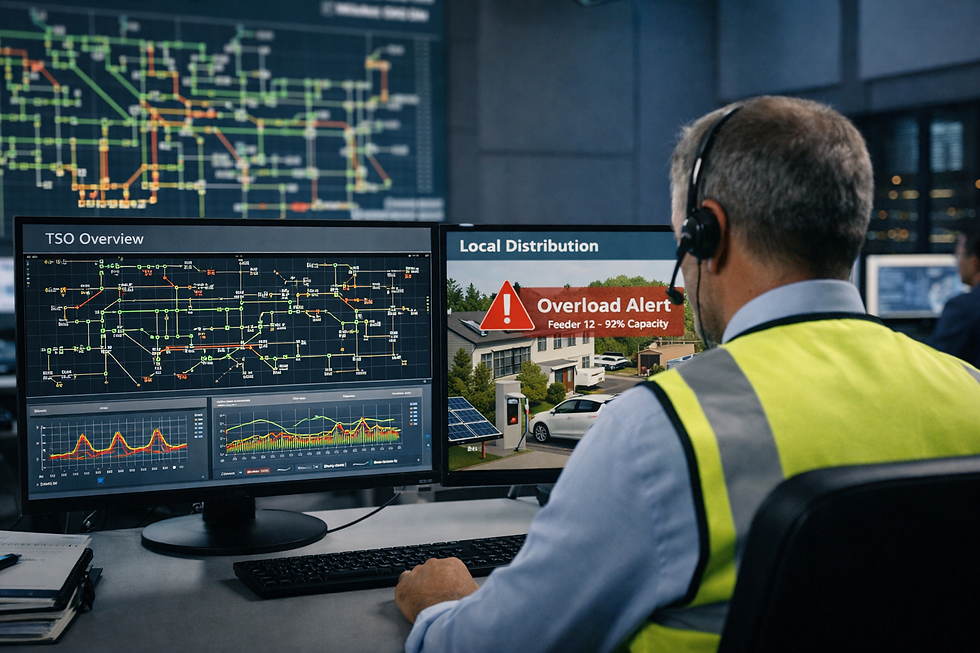
For utilities and system operators, AI provides grid visibility and control at the edge. Distribution‑level forecasting and anomaly detection help prevent congestion and outages; virtual power plants coordinate thousands of devices to deliver firm capacity and ancillary services. Participation frameworks such as the US FERC Order 2222 and EU local flexibility schemes are accelerating adoption.
Trust, privacy, and safety are prerequisites. Use privacy‑by‑design and security controls aligned with NIST’s Cybersecurity Framework, GDPR, and the NIST AI Risk Management Framework. Edge analytics can minimize raw data sharing, while model governance—versioning, drift monitoring, and human‑in‑the‑loop overrides—keeps automation safe and auditable.
A practical roadmap for product teams and policymakers: 1) standardize data models and APIs; 2) start with controllable loads that have clear comfort bounds (EVs, water/space heating, cold storage); 3) measure results—bill savings, peak reduction, CO₂ intensity; 4) certify cybersecurity and interoperability; and 5) align incentives so consumers share in the value their flexibility creates.
AI turns distributed devices into a synchronized resource. With the right guardrails and standards, machine learning will help integrate renewables, lower costs, and make power systems cleaner and more reliable—at home, on campus, and across the grid.
AI in energy management: from data exhaust to automated decisions
Forecasting, optimization, and secure automation convert DERs and buildings into grid assets while protecting privacy and comfort.


Comments