Distribution grid flexibility: the hard problem we must solve

The Distribution Grid Problem No One Likes to Talk About
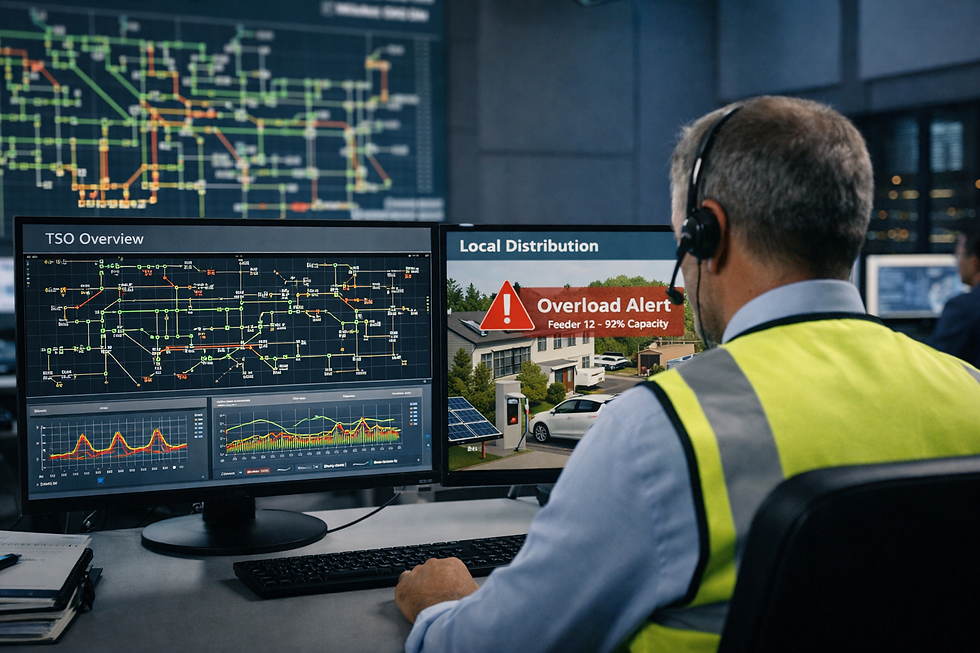
Distribution grid flexibility. The hard problem we must solve. Most grid debates fixate on transmission, but the hardest complexity lives at distribution—millions of nodes, incomplete topology models and highly local constraints. EVs, heat pumps, PV and batteries add volatile, street‑level flows that traditional planning struggles to follow.
TSO vs. DSO realities. Transmission operates thousands of nodes with relatively balanced flows; distribution manages millions with limited observability. A flexibility action that helps the system at TSO level can create local congestion if not coordinated. Scalable TSO–DSO coordination is therefore a central, unsolved challenge highlighted by ENTSO‑E TSO–DSO work and CEER regulatory guidance.
Reinforcement vs. orchestration. Traditional network upgrades are slow and capital‑intensive, yet many distribution constraints appear only in short, predictable windows.
That makes them ideal candidates for targeted automation using Home Energy Management Systems (HEMS) and local signals. Standards like OpenADR (automated DR), OCPP (EV charging) and Matter (secure device onboarding) enable practical orchestration, while metering/DER access via DLMS/COSEM provides verifiable data.
Local problems, local responses. HEMS‑enabled homes can respond feeder‑by‑feeder in real time: smoothing voltage, shifting heating cycles and EV charging, and reducing the need for permanent upgrades. Measurement & verification for grid services should align with EPRI and IEEE PES practices, with privacy/security anchored in NIST CSF or national frameworks.
Ignoring the distribution layer doesn’t shrink the problem—it makes it more expensive. Treat peak windows as coordination challenges and deploy automation behind the meter before pouring concrete.


I read the article and it clearly explains how distribution grid flexibility is becoming a major challenge as more renewable energy, electric vehicles, and smart devices are added to the system, making demand and supply less predictable. It highlights that solving this requires better coordination, planning, and use of flexible resources like storage and demand response. I remember during a busy study period I felt overwhelmed, so I used online course services to stay organized and keep up with my work. That experience showed me how flexibility and support are important in both learning and real systems.