HEMS at the Edge: The Fastest, Cheapest Energy Efficiency We’re Not Using
- Marcellus Louroza

- Jan 12
- 2 min read

HEMS at the Edge: The Fastest, Cheapest Energy Efficiency We’re Not Using
Energy efficiency through consumption management—especially via Home Energy Management Systems (HEMS)—is the least‑cost, fastest‑to‑scale lever of the transition. While debates focus on generation, the immediate gains lie in how electricity is consumed, orchestrated and optimized at the edge.
From theory to outcomes. Residential HEMS align household behaviour with grid reality automatically: shifting loads, flattening peaks, and absorbing surplus renewables. These actions reduce emissions today—no new plants required—by cutting marginal fossil dispatch and network stress. Field guidance from IEA on demand‑side management and project evidence from NREL show how flexibility becomes a dependable resource when automated.
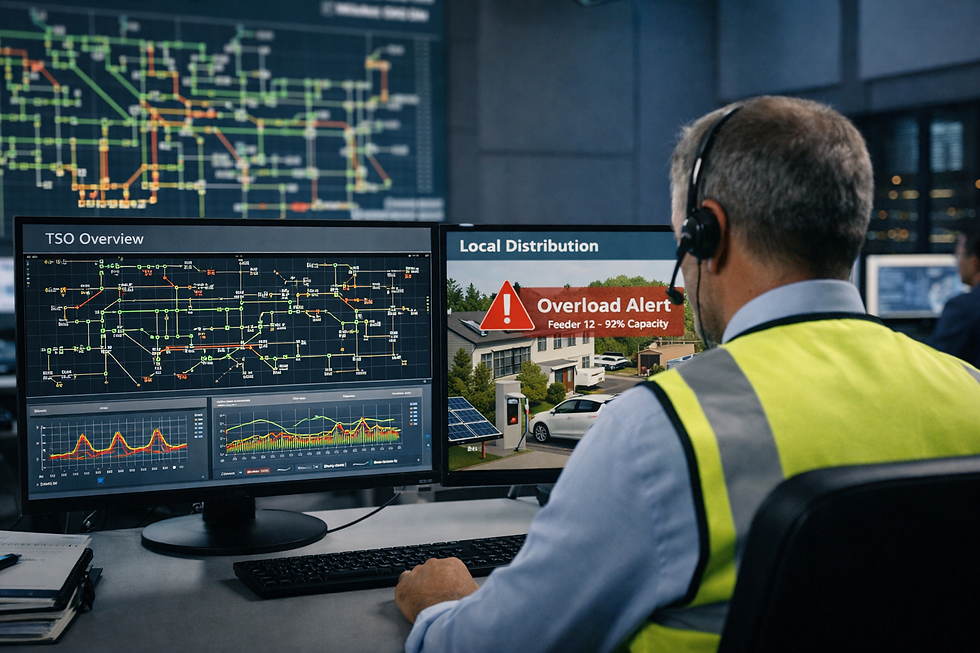
The iceberg below the meter. Distribution complexity, static tariffs and patchy TSO–DSO coordination quietly erode efficiency. Without automation, “flexibility” remains aspirational. HEMS is the missing operational layer that translates potential into measurable, auditable results—supported by M&V practices from EPRI and IEEE PES.
Interoperability first, trust always. Open standards enable multi‑asset control—EVs, heat pumps, PV and storage—while privacy builds acceptance. Key building blocks include OpenADR (automated DR), OCPP (EV charging), Matter (secure onboarding/home), and DLMS/COSEM (metering). For data stewardship, align with ISO 50001 where relevant, and codify privacy/security using NIST CSF or applicable national law.
From pilots to portfolio. Utilities, retailers, telcos and HEMS providers should act as an ecosystem: • Utilities/DSOs: expose price/flex signals and verify outcomes;
• Retailers/aggregators: bundle dynamic tariffs with HEMS;
• Telcos: deliver identity, secure messaging and carrier billing;
• HEMS vendors: automate schedules with explainable AI and default “good” settings.
Regional planning material from ENTSO‑E illustrates how local flexibility complements transmission‑level adequacy. What good looks like (checklist):
• One‑tap onboarding; start with a single anchor device (EV charger or heat pump). • Clear customer promise: bill savings explained and verified; easy opt‑out/data export.
• KPI discipline: avg. savings/home, total kWh shifted, and 90‑day retention.
• Open APIs; no proprietary dead‑ends; independent M&V certified.
Once market actors recognise the speed and economics of residential energy management, HEMS stops being a “nice‑to‑have” and becomes a decisive lever—delivering availability, security and affordability while integrating solar, wind, hydro and gas into a resilient whole.


Comments