Why Energy UX in Home Energy Management Systems (HEMS) Must Be as Intuitive as Spotify

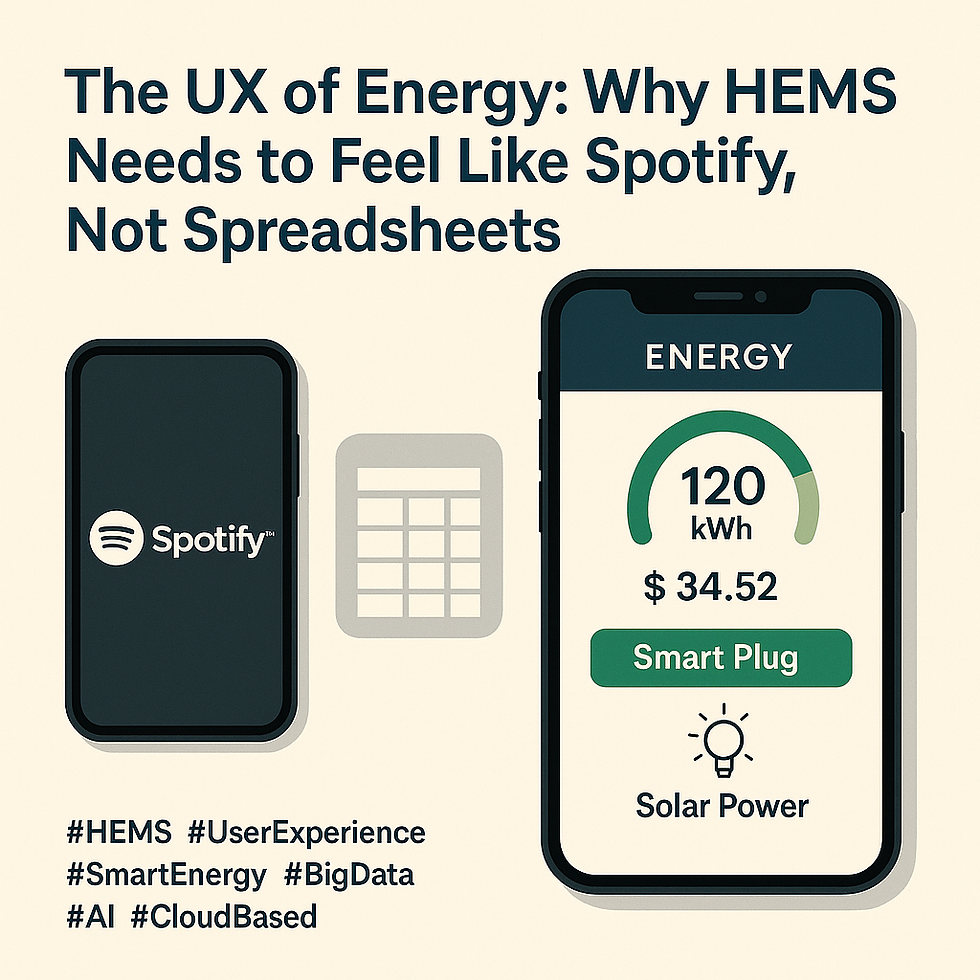
Most Home Energy Management Systems (HEMS) today are stuck in the past—designed for engineers, not everyday users. Their interfaces are dominated by dense charts, technical metrics, and zero emotional connection. But for energy management to become mainstream, its user experience (Energy UX) must take a radical turn.
A great energy experience should feel like opening Spotify or Netflix: clear, personalized, and instantly useful. No one reads a manual to stream music. Why should managing your home’s energy be any different?
🔹 What does great Energy UX look like?
Natural, human language“Your home is using 30% more energy than usual. Tap to shift laundry to off-peak hours.” No jargon. Just clarity.
One-tap interactionsWant to schedule EV charging for cheaper hours? Start the dishwasher when solar is peaking? Sell surplus energy to the grid? All of that should be as easy as pressing "play."
Smart defaults, minimal decision fatigueLet automation take care of the boring stuff—like choosing the best tariff or shifting appliance loads—while alerting users only when choices really matter.
Visible and frequent wins“You saved $3.50 today.” Followed by a running total for the week or month. Users need to see the value of their decisions in real time.
Seamless integration with existing techNo one wants to configure devices endlessly. A modern HEMS must work out-of-the-box with smart meters, solar panels, home batteries, EV chargers, and heat pumps.
Behind the scenes, AI, IoT devices, and predictive algorithms can do the heavy lifting—forecasting usage, adjusting loads, or predicting solar yield. But none of that needs to be visible to the user. The interface should surface only the next best action and its expected benefit—now, tonight, or this weekend.
🔹 When UX works, users become prosumers
Great UX doesn’t just make things easier—it changes behavior. It transforms passive energy consumers into active prosumers, who generate, store, and optimize their own energy.
This evolution is already underway. In mature European energy markets, several companies are pioneering UX-first energy platforms:
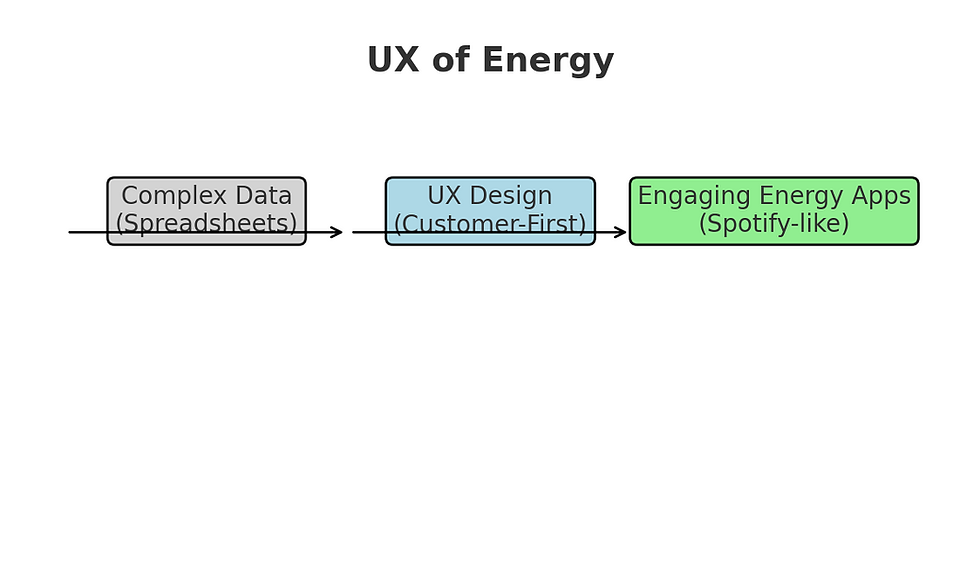
🔹 The “Spotify moment” is coming
The energy sector is approaching its “Spotify moment”—when design, automation, and personalization converge to make smart energy use as easy as streaming a song. We’re not fully there yet, but the direction is clear.
The future of HEMS won’t be won by technical specs—it will be won by seamless, human-centered design that makes people feel in control. And once users feel empowered, engagement—and impact—follows.


Comments